Di World Dance Master
About Kriptic
I go by Di World Dance Master. Twenty-six countries taught me one thing: Dancehall steps travel easily, and the stories inside them almost never do. I built this school around the part that gets lost — the move, the name of the person who made it, and the reason it exists.
@7ven_kriptic_official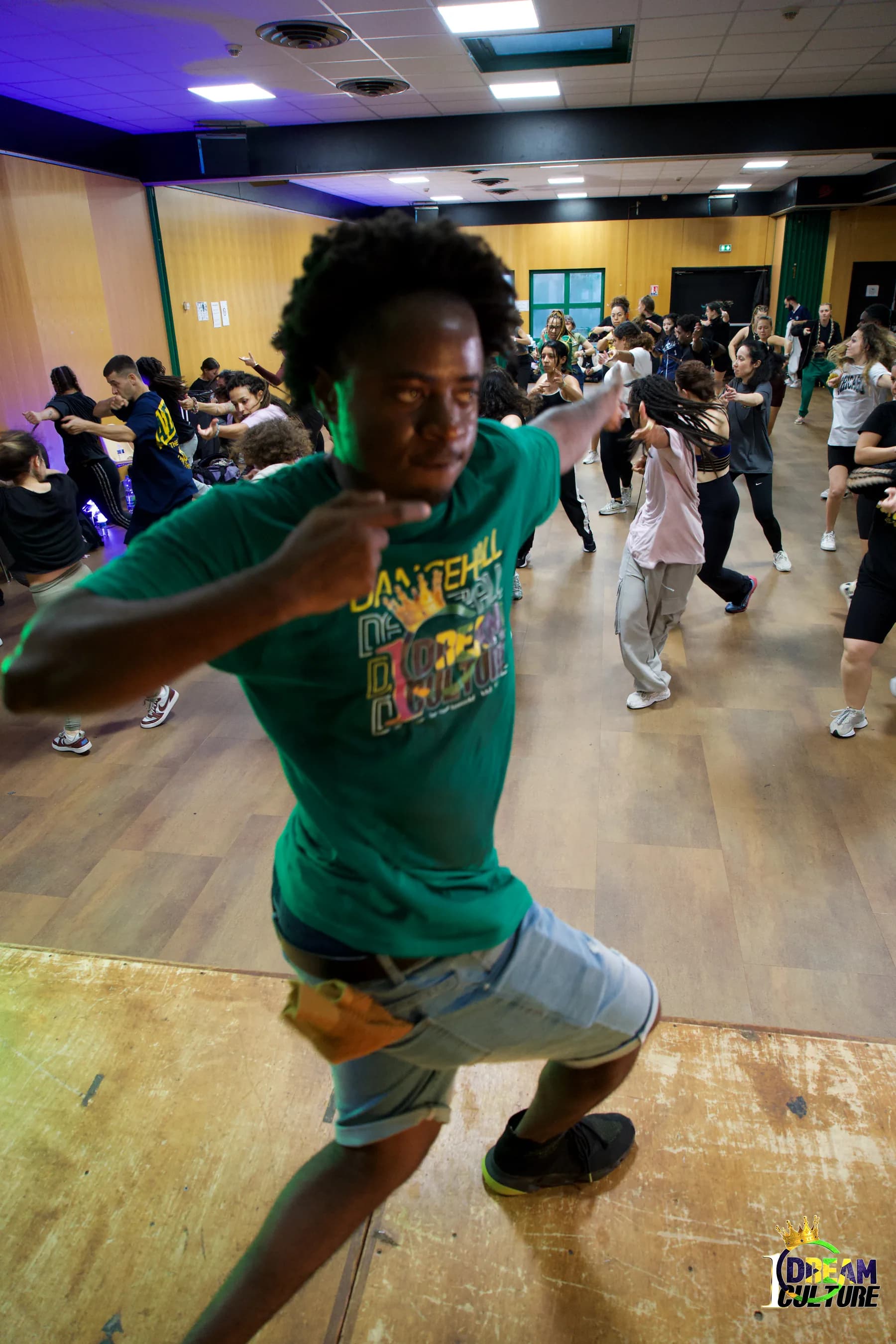
Kriptic
Kriptic in figures
- countries travelled
- 26
- families of Dancehall taught
- 6
- editions of Europe Dancehall King & Queen
- 2
- commitments behind every class
- 3
Why this school exists
I did not plan to become a teacher. I planned to dance, and dancing took me out of one room and into hundreds of others — sessions, stages, studios, competition floors, in twenty-six countries so far. In almost every one of them I had the same conversation.
Someone shows me a step learned from a video. The shape is often good, sometimes excellent. Then I ask who made it, and when, and what that person was answering to. The room goes quiet.
That silence is the reason DanceHall OnLine Lab exists. Steps cross borders on their own. The stories inside them do not travel unless somebody carries them on purpose. I decided to be one of the people who carries them.
What I mean by culture
Dancehall was not invented for classes. It was built in Jamaica — in yards, on street corners, in front of sound systems — by people with names, saying something precise with their bodies about the lives they were living. A dancer makes a move at a session. The crowd takes it up. A deejay records a tune that names it. The tune travels, and the move travels inside it.
Once you have seen that mechanism, you cannot unsee it. You stop asking what a step looks like and start asking what it is for. That shift is what I want to produce in you. Not more choreography — better hearing.
So in class we name the creator whenever he or she is documented, and say plainly when they are not. Guessing is worse than silence. I would rather teach you five steps you can place in time than fifty you can only imitate.
The six families
I teach six families. They are not commercial levels: they follow the real chronology and geography of the dance.
- Bogle — Old & Mid School, the founding vocabulary.
- Middle School, the bridge years.
- New School, what the floor is doing now.
- Skanking, the root of the bounce and the older Jamaican dances underneath it.
- Social Moves, the steps a crowd does together — the ones that actually make a party.
- Gun Movies, the hand language a floor uses to answer the selecta.
You can start anywhere. I will always send you back to the foundations. There is no version of this where you skip the bounce.
Di World Dance Master
I go by Di World Dance Master. It is not a ranking; it is closer to a job description. The world part is the twenty-six countries and everything they corrected in me. The master part is an obligation: I was trusted to pass on something that does not belong to me. Jamaica made this. I am one link in a chain.
Alongside the school I work as an entrepreneur and an event organiser. With 1 Dream 1 Culture I run Europe Dancehall King & Queen, now in its second edition: three days where European dancers are measured against the standards of the culture rather than those of a stage show. Teaching and organising are the same job: one builds dancers, the other builds the floor they need.
What I ask, and what I refuse to sell
Attention before talent. Accept that understanding takes longer than copying, and that the first weeks are slow on purpose. Say a creator’s name correctly. Work the bounce long after you think you have it, because you do not yet.
In exchange, no shortcut. You will not master a family in a term. What you get is a foundation solid enough that the culture becomes readable — on the floor, in the music, in the videos you thought you already understood.
Come as you are
I am based in Paris and I teach here. You need no experience, no particular body, no dance background — only to show up, listen, work, and be honest about where you stand.
Come as you are, and find the part of you that already belongs to this. What you leave with is not a routine. It is a place in something older than you, and the right to stand in it knowingly.
A step is not a skill I hand you. It is a story somebody left behind, and my job is to make sure you know whose it was.
How I teach
The method
Three commitments behind every class. In this order, without exception.
Context before choreography
Before you copy a shape, you learn where it came from: who made it, when, and what that person was answering to. We name creators whenever they are documented, and say so plainly when they are not — a wrong attribution is worse than an open question. It slows the first weeks down, and it changes everything after them. A step you can place in time is a step you can use, not just repeat.
Foundations before expression
Every session opens on the bounce alone — no arms, no travel, knees unlocked, weight forward of the heel. Then the count: aloud and slow, then at half tempo, then at tempo, then in silence. Arms come last, always, because in this vocabulary the legs keep time and the arms tell the story. Most people find this the hardest part. It is also the part that decides whether the rest reads as Dancehall.
Your own signature
Foundations are not a uniform. Once the base holds, the work turns to you: your weight, your height, your timing, the way your shoulders sit, what you actually want to say on a floor. I am not trying to produce copies of myself, and I am not trying to produce copies of Kingston. I want you recognisable — rooted in the culture, and unmistakably yourself inside it.
Where to begin
I teach in Paris. No experience, no particular body, no dance background — only attention, work, and honesty about where you stand.